AI influencer generator comparison: consistency, NSFW rules, pricing and rights
Every AI influencer generator promises the same face in every post. The differences that decide whether a character can earn money are in the content rules, the output rights and the plan you actually need.
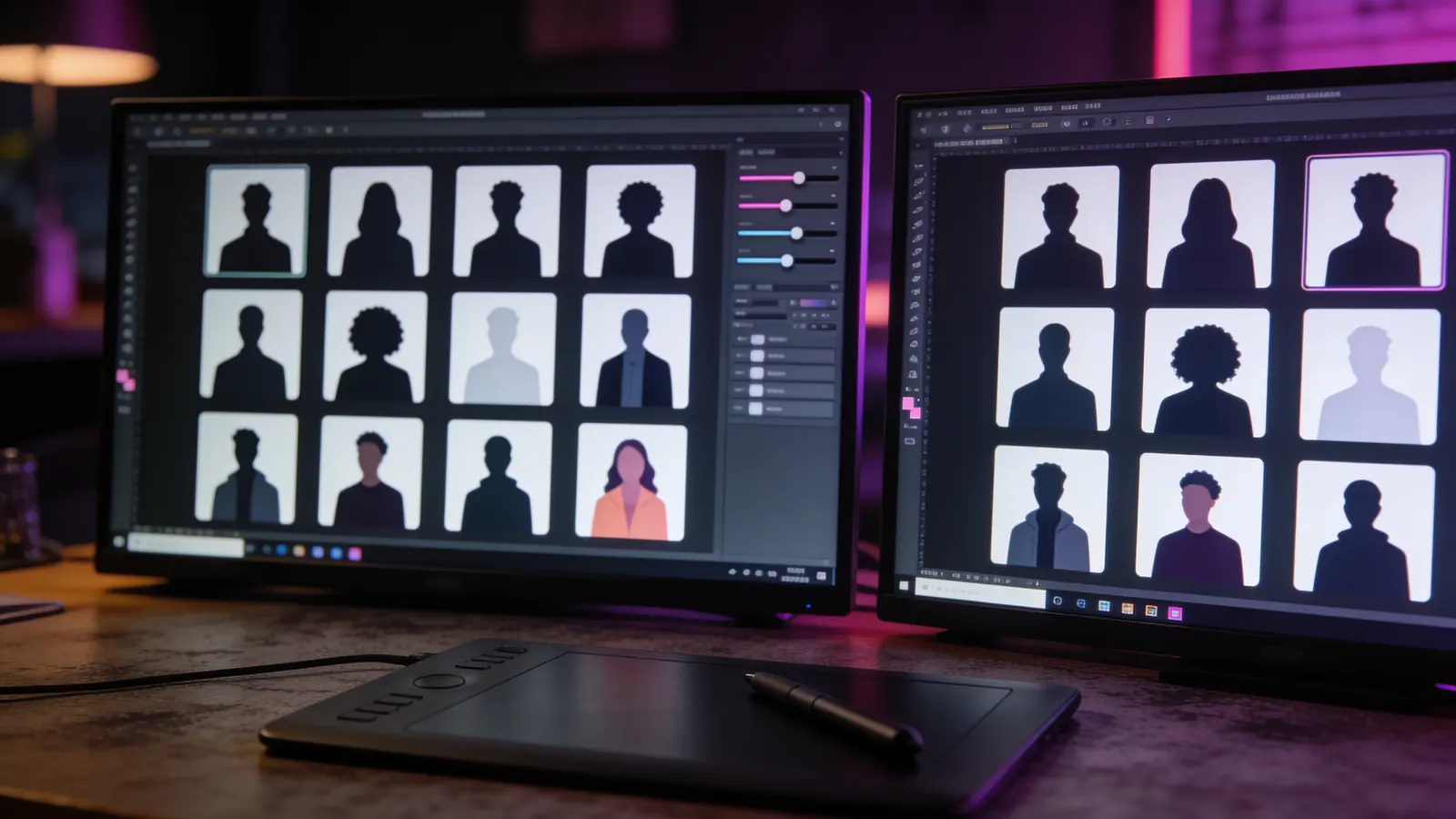
An AI influencer generator is software that creates one synthetic person and keeps that face consistent across photos and video. For operators, the right pick comes down to four things: how well it locks the character, whether its rules allow adult content, what it costs each month, and what rights you hold over the output.
Most pages ranking for this keyword are written for brands making ad videos. They skip what decides whether a character can earn on a fan or companion site: content rules, output rights and likeness risk. This comparison covers Higgsfield, Eromify, The Influencer AI and BasedLabs, plus Midjourney and Leonardo. Every price and policy was checked on the vendor's own page on October 6, 2026, and plans change often. For the full build process, see our step-by-step guide to making an AI influencer.
What does an AI influencer generator do that a normal image generator does not?
A normal image generator gives you a new stranger with every prompt. An AI influencer generator gives you the same person every time, in a new outfit, location or pose. Audiences subscribe to a character they recognize, so consistency is the whole product. The tools here use three methods:
- Trained identity. You train a personal model on a set of images. Higgsfield's Soul ID asks for at least 20 photos of the same person and trains in about 3 to 5 minutes. BasedLabs asks for 5 to 15 images. Eromify lists Influencer Training and Flux LoRA training on its pricing page.
- Saved character references. Eromify's pricing FAQ says you can save a character and @mention it in any prompt to reuse that face across its image, video and canvas tools.
- Reference images and trait builders. Midjourney's Omni Reference places a character from one reference image into new scenes on version 7, at twice the GPU time of a regular image. Higgsfield's AI Influencer studio and The Influencer AI's builder let you pick traits such as build, hair and eye shape to design a face without uploading anyone's photo.
One warning: some of these features are designed for cloning yourself. The Influencer AI's AI Clone trains on 8 to 12 selfies, which suits a creator making a digital double of their own face. It is never a route for building a character from photos of someone else. Design every character from scratch and train only on images you generated.
Which AI influencer generators do operators actually use?
Higgsfield
Higgsfield is a broad image and video platform with an AI Influencer studio and Soul ID. Its pricing page lists Starter at $19 a month billed monthly, and Plus at $59 a month, or $47 a month billed annually under a 20% offer running when we checked. Its terms of use say the company does not claim ownership of your outputs or restrict their commercial use, and your rights survive cancellation. The same terms ban obscene content, any lewd depiction of minors whether real or synthetic, depicting people without permission, and presenting output as human-made when it is not. The product is pitched at social video and ads, not adult content.
Eromify
Eromify is built for monetized creator accounts rather than brand campaigns. Its pricing page lists four plans billed monthly: Builder at $29 (500 credits), Launch at $45 (1,000 credits), Growth at $79 (4,000 credits) and Creator at $99 (6,000 credits). Yearly billing is advertised at a much lower monthly rate, billed for 12 months up front; confirm the current yearly price on the page before you commit. Monthly credits do not roll over. The pricing FAQ says everything you generate is yours to post and use commercially. Its acceptable use policy allows mature content tools on certain higher tiers for signed-in subscribers who confirm they are 18 or older, and it has the strictest likeness rules in this group, covered below.
The Influencer AI
The Influencer AI focuses on social personas: a trait-based builder, AI Clone, photo batches, short talking videos with lip sync, virtual try-on and motion transfer. Its pricing page lists Starter at $19 a month (100 credits, 1 custom influencer), Creator at $39 (250 credits, 3 influencers), Professional at $99 (700 credits, 8 influencers) and Enterprise at $199 (1,500 credits, 16 influencers), with a 3-day trial that includes 10 credits. Its terms of service grant full commercial rights to the models, images and videos you generate. The terms set out no specific adult content policy, so ask the vendor before going beyond social content.
BasedLabs
BasedLabs is a multi-model image and video studio with a virtual influencer workflow. Its pricing page sells credit packs from $10 for 300 credits up to $499 for 16,500 credits, and states that commercial use is included. Its blocked content policy prohibits sexually graphic and pornographic content, content resembling minors, and deepfakes that impersonate people without consent. Note that its terms grant BasedLabs a perpetual, sublicensable license to content you submit, which matters if you want exclusive control of a character's look.
Midjourney
Midjourney is not an influencer tool, but teams use it to design a character's base look. Its plan comparison lists Basic at $10, Standard at $30, Pro at $60 and Mega at $120 a month, with 20% off for annual billing. Subscribers can use images commercially, but a company with more than $1,000,000 in gross revenue a year must be on Pro or Mega, and Stealth Mode, which keeps work private, is only on those two plans. Its community guidelines require safe-for-work content only: no nudity or sexualized imagery.
Leonardo
Leonardo offers a free tier and paid plans with personal model training. Its pricing page lists Essential at $12 a month (10 personal AI models), Premium at $30 (20) and Ultimate at $60 (50), with up to 20% off for yearly billing. On the free plan, creations are public. A Leonardo help center article says free users' public generations can be viewed and remixed by others, while paid users can keep generations private and retain full ownership of them. Check its current terms for adult content rules.
AI influencer generator comparison table
Prices are the entry points shown on each vendor's page on October 6, 2026, before tax. "Check current terms" means we could not confirm the policy on the vendor's own page.
| Tool | How it keeps the face consistent | Adult content | Entry price | Output rights |
|---|---|---|---|---|
| Higgsfield | Soul ID trained on 20+ photos; trait-based AI Influencer builder | Terms ban obscene content | $19/mo Starter; $59/mo Plus | No ownership claim, no commercial restriction |
| Eromify | Influencer Training, LoRA training, saved character @mentions | Mature tools on higher tiers, 18+ confirmation, no real people | $29/mo billed monthly; lower yearly rate | Yours to post and use commercially |
| The Influencer AI | Trait builder or AI Clone from 8 to 12 selfies | Check current terms | $19/mo; 3-day trial | Full commercial rights |
| BasedLabs | Training on 5 to 15 images | Prohibited | $10 for 300 credits | Commercial use included; broad license to BasedLabs |
| Midjourney | Omni Reference from one image | Prohibited (SFW only) | $10/mo Basic | Commercial use; Pro or Mega above $1M revenue |
| Leonardo | Personal AI models (10 to 50 by plan) | Check current terms | Free; $12/mo Essential | Paid private generations owned by you |
Which AI influencer generators allow NSFW content?
Most do not. Midjourney limits everything to safe-for-work content, BasedLabs blocks pornographic content, and Higgsfield's terms prohibit obscene output. Eromify is the clear exception in this group: its acceptable use policy describes mature content tools available only to signed-in subscribers on eligible plans who confirm they are at least 18. Its pricing page points creators to the Growth plan for its mature "Spicy" generation.
That permission comes with the tightest likeness rules we found. Eromify bans the face, name or likeness of any real person, including look-alike prompts. Photos of real people may not be uploaded, and uploads carrying camera or phone metadata are rejected outright. It also bans any character styled as a minor and any attempt to make an adult character look younger.
Those rules apply to you whatever tool you use. In the United States, the FTC began enforcing the TAKE IT DOWN Act on May 19, 2026. The law covers nonconsensual intimate imagery including "digital forgeries" made with AI, and it requires covered platforms to remove reported content within 48 hours of a valid request. A character that resembles a real person is a legal and takedown risk. Three rules keep an operator safe:
- Every character must be clearly adult in face, body, styling and backstory. No school settings, no youthful framing, no ambiguity.
- Never upload, name or describe a real person, and never prompt for a look-alike of a celebrity or creator.
- Keep a record of how each character was made: prompts, settings and the generated images you trained on. It is your evidence that the character is synthetic.
Who owns AI influencer images, and can you use them commercially?
Higgsfield, Eromify and The Influencer AI all state that you can use outputs commercially. Midjourney sets a revenue threshold for larger companies, Leonardo separates public free-plan work from private paid work, and BasedLabs takes a broad license to what you submit. Two practical points matter more than the headline:
- Privacy is part of ownership. Public-by-default generations let anyone study and copy your character's look. On Midjourney only Pro and Mega include Stealth Mode, and Leonardo's free-plan creations are public. Develop an earning character in private.
- A commercial license is not exclusivity. A vendor can let you sell your images without guaranteeing nobody else makes a similar face. Distinctive styling and a written persona protect a character's value more than license text does.
If a character will anchor a business, read the full terms and get legal advice.
Which AI influencer generator is best for social accounts versus fan or companion sites?
The use case narrows the list quickly:
- Brand, UGC and safe-for-work social accounts. Higgsfield, The Influencer AI and BasedLabs are built for short-form video, motion presets and fast batches.
- Art direction for a character's base look. Midjourney and Leonardo are strong for designing the face, wardrobe and world, as long as you work inside their safe-for-work rules and keep the work private.
- Monetized fan subscriptions with mature content. You need a generator whose written policy permits it, which in this group means Eromify, and a platform that accepts AI creators. Our breakdown of the best fan platforms for AI models compares the options.
- AI companion sites. A companion site needs a cast of consistent characters plus chat, billing, age gating and moderation. The generator only handles the faces.
How do you choose an AI influencer generator?
- Read the acceptable use policy before the pricing page. If the rules forbid the content your model depends on, the price is irrelevant, and violations can cost you the account.
- Test consistency on your own brief. Use a trial or the cheapest plan to generate the same character across different lighting, angles, outfits and distances. Check close-ups and full-body shots separately, since a face can hold in one and drift in the other.
- Price per usable image, not per credit. Eromify's monthly credits do not roll over, and Midjourney's Omni Reference uses twice the GPU time of a standard image. Count the outputs you actually keep.
- Check privacy and rights on the plan you will use. Free and entry tiers are where public galleries and weaker rights tend to sit.
- Plan for portability. Keep your generated training set and persona notes outside the vendor. Higgsfield's terms say your rights in exported outputs survive cancellation, which is the standard to look for.
- Disclose that the character is AI. Higgsfield's terms prohibit presenting output as human-generated, and Eromify's policy bans presenting AI media as authentic footage of a real person without disclosure.
How does a generated AI influencer turn into revenue?
A consistent, clearly adult, fully synthetic character is an asset, but the generator is only the production line. Revenue comes from subscriptions, pay-per-view content, tips, custom requests, chat and brand deals. Our guide to how AI influencers make money walks through each stream and why headline earnings claims are usually misleading.
Operators tend to follow one of two paths. The first is renting an audience on a fan platform, which is quick but leaves pricing and the customer relationship with the platform. The second is owning a branded site where the character, chat and checkout live under your domain. That second path is what WhiteLabelFans builds: a white-label AI companion platform launched under your brand, with partners earning up to 60% of total site revenue. Either way, pick the generator last: decide the niche, the content rules and where the money is collected, then choose the tool whose policy fits.
Frequently asked questions
What is the best AI influencer generator?
There is no single best tool; it depends on the content you need. For safe-for-work social video, Higgsfield and The Influencer AI are built around consistent personas and short clips. For designing a character's look, Midjourney and Leonardo are popular. For monetized accounts that need mature content, Eromify is the one in this comparison whose written policy permits it. Always check the current terms before committing.
How much does Eromify cost?
On October 6, 2026, Eromify's pricing page listed four plans billed monthly: Builder at $29, Launch at $45, Growth at $79 and Creator at $99, with 500 to 6,000 credits a month. Yearly billing was advertised at a much lower monthly rate, paid for 12 months up front. Monthly credits do not roll over. Prices change often, so check the live pricing page before subscribing.
Can you make an AI influencer that looks like a real person?
No, not safely or within most vendors' rules. Eromify bans real-person likenesses and look-alike prompts, BasedLabs blocks deepfakes, and Higgsfield requires consent from anyone whose face you upload. In the US, the TAKE IT DOWN Act covers AI-made intimate "digital forgeries" and requires platforms to remove reported content within 48 hours. Design every character from scratch and keep records showing it is synthetic.
Which AI influencer generators allow NSFW content?
Few mainstream tools do. Midjourney is safe-for-work only, BasedLabs prohibits pornographic content, and Higgsfield's terms ban obscene output. Eromify's acceptable use policy permits mature content tools on eligible higher tiers for signed-in subscribers who confirm they are 18 or older, with strict bans on real-person likenesses and anything suggesting a minor. Every character must be clearly adult, whichever tool you use.
Do you own the images an AI influencer generator creates?
It depends on the vendor and plan. Higgsfield says it claims no ownership and does not restrict commercial use. Eromify and The Influencer AI grant commercial use of outputs. Leonardo says paid users retain ownership of private generations, while free-plan work is public. Midjourney requires Pro or Mega for companies above $1,000,000 in yearly revenue. Read the full terms for the plan you will actually use.
Sources
- Higgsfield: Pricing plans
- Higgsfield: Terms of Use Agreement
- Higgsfield: Soul ID character consistency
- Higgsfield: AI Influencer studio
- Eromify: Pricing
- Eromify: Acceptable Use Policy
- The Influencer AI: Product overview
- The Influencer AI: Pricing
- The Influencer AI: Terms of Service
- BasedLabs: Pricing
- BasedLabs: Create an AI influencer
- BasedLabs: Blocked Content Policy
- BasedLabs: Terms of Service
- Midjourney: Comparing Midjourney Plans
- Midjourney: Community Guidelines
- Midjourney: Omni Reference
- Leonardo.Ai: Pricing
- Leonardo.Ai Help Center: Commercial usage and terms of service
- FTC: Take It Down Act enforcement starts now

WhiteLabelFansThe partner team behind the WhiteLabelFans platform, writing from what we see running AI companion sites for operators. About us · Updated
Essential guides: White label AI companion platform · Candy AI clone vs white label · How AI companion sites earn · Launch niches