How to make an AI influencer in 2026: a 7-step operator guide
The face is the cheap part now. Here is the full operator process, from persona brief to disclosure rules to the monetization path that turns followers into revenue.
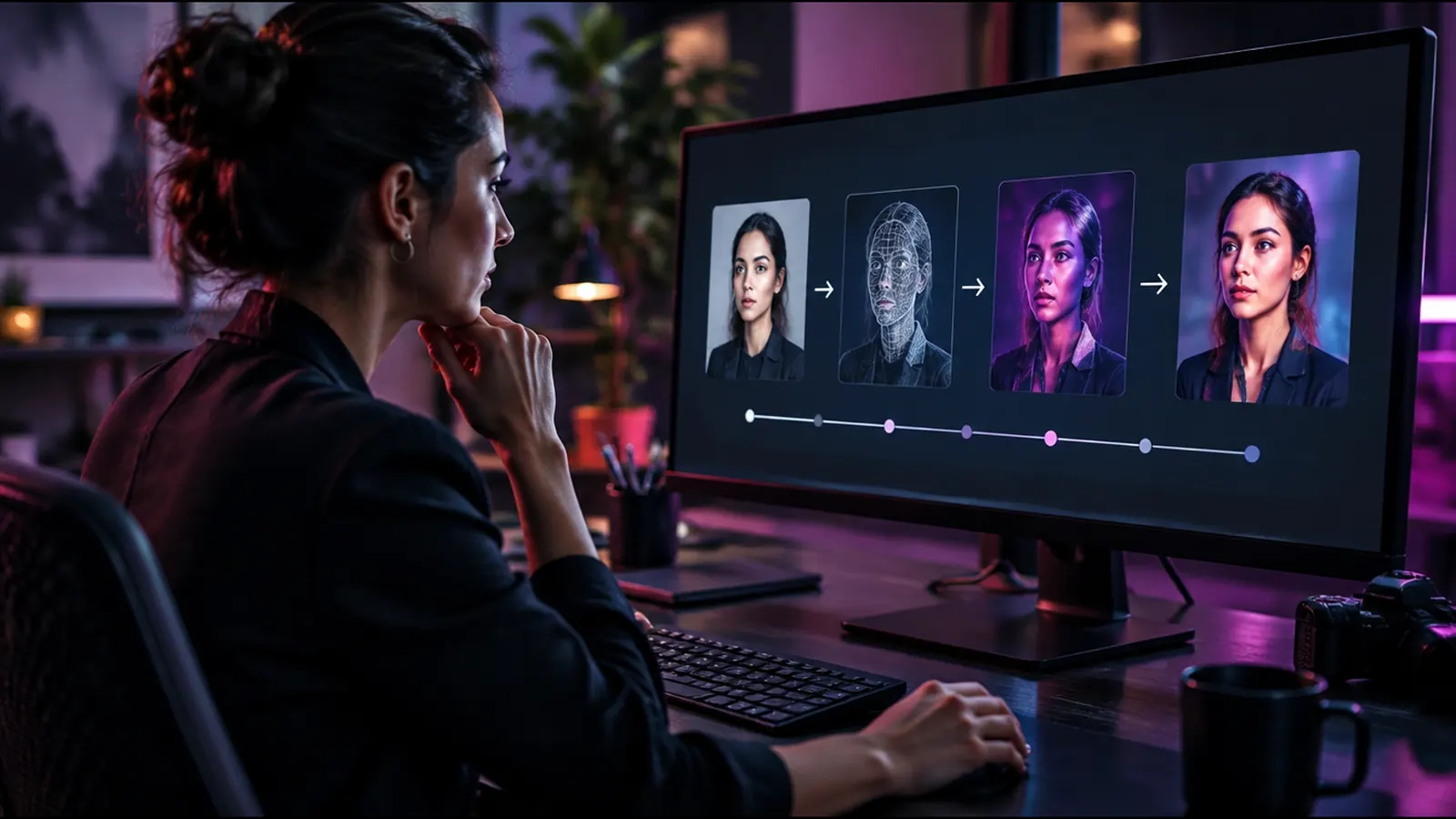
To make an AI influencer, pick a niche with paying demand, write a one-page persona brief, lock one consistent face with a reference image set, build a two-week content library, label the account as AI on every platform, and route followers to a place that pays, such as a fan subscription or AI chat site you own.
That is the whole process in one breath. The hard part is that most guides stop at "generate a pretty face and post it." The face is the cheap part now. What separates an AI influencer that earns from one that quietly dies at 400 followers is consistency, disclosure that keeps the account alive, and a monetization path that was planned before the first post. This guide walks through each step the way an operator, affiliate or agency should run it: as a small media business with a character at the center, not as an art project.
What is an AI influencer, exactly?
An AI influencer is a fictional, computer-generated persona that publishes content and builds an audience the way a human creator does. The images and clips are generated, the captions are written or assisted by AI, and a real person or team runs the account behind the scenes. Some AI influencers are openly stylized (anime, 3D, illustrated); others are photorealistic and look like a real person, which is exactly why the disclosure rules covered below matter so much.
How to make an AI influencer in 7 steps
Here is the operator version of the process. Each step gets its own section below.
- Pick a niche where the audience already pays for something (subscriptions, coaching, products, companionship).
- Write a persona brief: name, age (always an adult), backstory, personality, tone of voice, visual rules and things the character never does.
- Lock the face: generate a reference set and use the same character reference, seed or trained model for every image.
- Build a content library of two weeks of posts before launch so you never post under deadline pressure.
- Set up accounts and disclosure on each platform, using its AI label tools from day one.
- Grow the audience with a fixed posting cadence, comments and collaborations with other accounts.
- Monetize by sending followers to an owned destination: a fan subscription, a chat site or brand deals.
Step 1: Choose a niche that already pays
Most first-time builders choose a niche by asking what kind of character they would enjoy creating. A better question is: where does this audience already spend money every month? Fitness, gaming, cosplay, travel, fashion and companionship all have proven spending habits. A beautiful travel persona in a niche where followers never buy anything is a hobby with a hosting bill.
Run three quick checks before you commit:
- Spend signal. Are there human creators in this niche selling subscriptions, paid chat, presets, programs or merch? If nobody is selling, there may be no buyer.
- Content repeatability. Can you produce 30 distinct posts a month without the feed looking like one photo with 30 backgrounds? Niches built on settings, outfits, hobbies or stories are easier than niches built on one stunt.
- Platform risk. Some niches (especially suggestive ones) are fine on a fan platform but fragile on Instagram or TikTok. Plan where the audience will live if a social account gets restricted.
If you are building for the companion market, our niche library lists the character angles that hold attention best, from fitness and gamer personas to slow-burn romance storylines.
Step 2: Write a persona brief before you generate anything
The persona brief is one page that every image prompt, caption and chat reply has to agree with. Without it, the character drifts: the hair changes, the humor changes, the backstory contradicts itself, and followers stop believing in her (or him) long before they notice why.
| Brief field | What to decide | Example |
|---|---|---|
| Name and handle | Short, searchable, available on every platform you plan to use | "Mara Vale," @maravale |
| Age | Always clearly adult, stated in the brief and reflected in every image | 27 |
| Backstory | Two or three facts that generate content ideas | Former climbing instructor, now living in a van in Colorado |
| Personality | Three adjectives plus one quirk | Dry, encouraging, outdoorsy; names every van she owns |
| Voice in text | Sentence length, emoji use, slang, words she never uses | Short sentences, one emoji max, never says "babe" |
| Visual rules | Face, hair, body type, signature items, color palette | Auburn braid, freckles, green jacket, warm sunset tones |
| Hard limits | Topics and content the character never touches | No politics, no real brands without a deal, no explicit content on social |
Keep the brief in a shared document. When you later hire a caption writer, a chat moderator or an editor, this page is their onboarding.
Step 3: Design a face and keep it consistent
Consistency is the single biggest quality signal in an AI influencer. Followers forgive a slightly artificial look far faster than they forgive a face that changes between posts. In practice there are three ways to lock a character, from fastest to most controlled:
- Character reference in a hosted generator. Most current image tools let you upload one or more reference images of your character and generate new scenes that keep the same face. This is the fastest route and fine for a first persona.
- A fixed reference sheet. Generate a "character sheet" first: front, three-quarter and profile views, a few expressions and two or three outfits. Feed the best images back in as references for every future generation.
- A trained model. For a serious, long-running persona, teams train a small custom model (often called a LoRA) on 20 to 40 curated images of the character. It takes more setup but gives the most stable results at volume.
Two rules apply no matter which route you choose. First, the character must be fictional: never build a persona from a real person's face, including a celebrity, an ex or a stock model, unless that person has licensed their likeness to you in writing. Second, the character must look and be described as an adult in every single image. Platforms and payment processors enforce both rules aggressively, and Fanvue's own policy states that AI media must not depict a real person other than the account owner and cannot resemble anyone under 18.
Step 4: Build a two-week content library before launch
Launching with an empty feed and promising yourself you will generate daily is how most AI influencer accounts die in week three. Build the first 14 days before the account goes public. A practical starting library looks like this:
| Content type | Quantity for 14 days | Purpose |
|---|---|---|
| Feed photos (carousels and singles) | 10 to 14 | Establish the look and the world the character lives in |
| Short vertical clips | 6 to 8 | Reach; short video is still where discovery happens on most social apps |
| Stories or casual posts | 20 to 30 | Daily presence and personality between bigger posts |
| Captions and replies | All of the above, plus 20 stock replies | Keep the voice consistent with the persona brief |
Batch production by scene: generate a full "day at the climbing gym" set in one session, then a "coffee shop morning" set, and spread them across the calendar. It is faster, keeps lighting consistent within a set and gives you natural mini storylines.
Step 5: Set up accounts and disclose that it is AI
Disclosure is no longer optional, and it is the step that keeps the account alive. Every major platform now has an AI label, and regulators treat a virtual persona selling something like any other endorser.
- Instagram and Facebook. Meta applies an "AI info" label to posts and, in May 2026, Instagram began rolling out an "AI creator" account label that shows on the profile and on content for accounts that regularly use AI creation tools. Turn it on when it is available to you.
- YouTube. YouTube requires creators to disclose meaningfully altered or synthetic content that looks realistic, through the "AI use" setting at upload. Creators who repeatedly skip it can face labels applied for them, content removal or suspension from the Partner Program.
- TikTok. TikTok requires creators to label realistic AI-generated content and can auto-label content that carries Content Credentials provenance metadata. Use the toggle on every post.
- Fan platforms. Fanvue allows fully AI personas but requires that AI content is clearly disclosed in the bio, captions or a watermark. Our comparison of the best fan platforms for AI models covers which other platforms accept synthetic personas and which ban them.
The commercial rules matter too. When the FTC updated its Endorsement Guides in 2023, it expanded the definition of endorsements to cover virtual influencers and added a definition of "clear and conspicuous" disclosure, noting that a platform's built-in tool might not be enough on its own. If your AI influencer promotes a product, disclose the paid relationship plainly in the post itself, the same way a human creator would.
Step 6: Grow the audience
An AI influencer grows the same way any small creator does, with a few extra advantages in output and a few extra handicaps in trust.
- Post on a fixed schedule. Your content library makes this easy. Pick a cadence you can sustain for 90 days, such as one feed post and three stories a day, and do not break it.
- Lead with short video. Short vertical clips do most of the discovery work. Static images build the profile; clips bring strangers to it.
- Reply in character. Comment replies and DMs are where a persona becomes a personality. Use the voice rules from your brief, and never let a reply contradict the backstory.
- Collaborate. Shared posts, duets and shout-outs with adjacent accounts (including other AI personas you run) cross-pollinate audiences faster than hashtags.
- Track what converts, not just what gets likes. A post with fewer likes that sends more clicks to your paid destination is the better post.
Step 7: How AI influencers make money
Followers are not revenue. Plan the money before the first post, because the monetization path changes what you post and where you send people. The main options:
| Revenue stream | How it works | Who keeps control |
|---|---|---|
| Brand deals and sponsored posts | Brands pay for posts or campaigns featuring the character | Brand and platform; requires FTC-style disclosure |
| Platform creator funds | Payouts based on views or ad revenue share | The platform sets the rules and the rate |
| Fan subscriptions | Monthly subscription for exclusive content on a fan platform | The platform, which takes a cut and can change AI policy |
| AI chat and companionship | Fans pay to chat with the character one on one | Whoever owns the chat site and the subscriber list |
| Digital products and merch | Presets, guides, prints, apparel | You, through your own store |
For most operators the highest-value move is the last two rows plus an owned subscription: turn followers into members of a site where they can talk to the character, subscribe and buy, instead of renting that relationship from a social app that can restrict the account overnight. We break down all of these streams in more detail in our guide to fan monetization for creators.
A worked example (illustrative numbers)
The figures below are assumptions for planning, not results from any real account. Suppose your AI influencer reaches 40,000 followers across Instagram and TikTok, and 1% of them click through to the character's own chat and subscription site each month. That is 400 visitors. If 5% of visitors subscribe at $14.99 a month, you add 20 subscribers a month. After six months, with churn, you might hold somewhere around 80 to 100 paying members, plus any one-off purchases. Change any single assumption and the outcome moves a lot, which is why the click-through rate from social to your owned site is the number to watch.
For realistic ranges on subscription and chat revenue, see our AI companion site earnings breakdown.
Build it yourself or use a white-label site?
You can absolutely build the whole stack yourself: generator subscriptions, a website, a chat engine, payments that accept adult-adjacent businesses, age verification, moderation and hosting. The persona and the audience are the part only you can build. The infrastructure is the part where most solo operators lose months.
That is the gap WhiteLabelFans fills. We build and run a turnkey AI companion site around your character or niche: the chat experience, memberships, payments and hosting, branded as yours. You focus on the persona and on traffic, and earn up to 60% of total site revenue. If you are comparing routes, our page on the white-label AI companion platform explains what is included and what you still own.
Common mistakes when making an AI influencer
- No disclosure. Hiding that the character is AI. It risks platform penalties, FTC problems on sponsored posts and a trust collapse when followers find out.
- Using a real person's likeness. Basing the face on a celebrity or a real model without a written license. It is a fast route to takedowns and legal claims.
- Building on rented land only. Growing a big social account with no owned site or email list. One restriction and the business is gone.
- Monetizing too late. Waiting for 100,000 followers before testing whether anyone will pay. Test a paid offer early, even at a small audience.
Frequently asked questions
Can you make an AI influencer for free?
You can start for close to nothing using the free tiers of image generators and free social accounts, but free tiers usually limit volume, resolution and character consistency features. Most operators move to paid tools within the first month because a consistent face and a two-week content library need many generations and some editing time.
How long does it take to make an AI influencer?
A persona brief and a locked face can be done in a few days. A two-week launch library usually takes another week of batch production and curation. Growing an audience that converts takes longer: plan on at least 90 days of consistent posting before judging whether a persona is working.
Do I have to disclose that my influencer is AI?
Yes, in practice. Instagram, YouTube and TikTok all have AI labeling rules for realistic synthetic content, and fan platforms like Fanvue require clear disclosure. The FTC's Endorsement Guides also cover virtual influencers, so any sponsored post needs a clear paid relationship disclosure too. Put "AI" in the bio from day one.
Can my AI influencer look like a real person?
Not unless that person has licensed their likeness to you in writing. Building a character from a celebrity's or private person's face invites takedowns, platform bans and legal claims. Design an original fictional face, keep it consistent, and make sure the character is clearly an adult in every image and description.
What is the best way to monetize an AI influencer?
Brand deals and creator funds work at large scale, but the most reliable path for most operators is sending followers to an owned destination: a subscription and AI chat site built around the character. You keep the relationship and the subscriber list, and you are not exposed to one platform changing its AI policy.
How many AI influencers should I run?
Start with one and prove it converts before adding more. Once one persona has a repeatable content process and a working paid offer, adding a second or third persona in adjacent niches reuses most of that process. Running several weak personas at once usually produces several weak accounts.
Sources
- Fanvue Help Center: Is AI content allowed on Fanvue?
- Social Media Today: Instagram adds AI creator labels
- YouTube Help: Disclosing use of altered or synthetic content
- TikTok Newsroom: Partnering with our industry to advance AI transparency and literacy
- FTC: Updated advertising guides to combat deceptive reviews and endorsements

WhiteLabelFansThe partner team behind the WhiteLabelFans platform, writing from what we see running AI companion sites for operators. About us · Updated
Essential guides: White label AI companion platform · Candy AI clone vs white label · How AI companion sites earn · Launch niches