AI virtual influencer business: scale beyond one persona
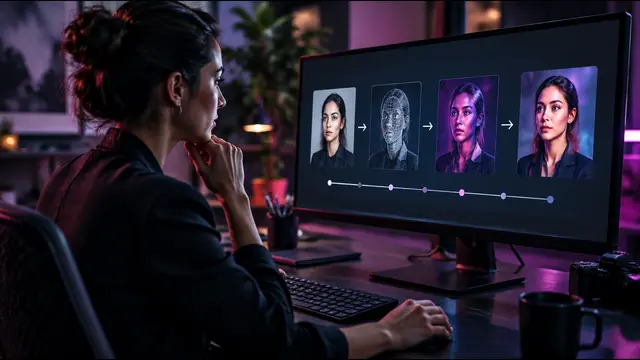
An AI virtual influencer business doesn’t scale by publishing more images from one persona. It scales by building a portfolio with shared production, distinct audience signals, and monetization paths that turn attention into recurring companion revenue.

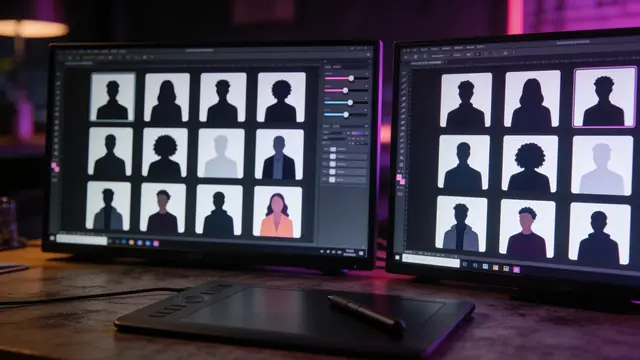
An AI virtual influencer business with three focused personas often outperforms a single polished flagship, even when the flagship has better reach. Portfolio design, not image volume, determines whether your acquisition costs fall as you add traffic.
An AI virtual influencer business is a portfolio operation that combines synthetic identity, short-form distribution, direct fan relationships, and paid companion experiences. The scalable version uses one production system across 4 to 8 distinct personas, targets a blended 3% to 6% free-to-paid conversion rate, and tracks revenue per acquired visitor rather than follower count.
The market already shows why the portfolio matters. Aitana Lopez built commercial reach as a recognizable virtual personality, while Lil Miquela demonstrated that a synthetic identity can sell sponsorships, music, and cultural relevance without a conventional creator schedule. Their public visibility is useful, but visibility alone doesn’t produce predictable monthly revenue.
SensorTower’s State of AI 2026 reported that Americans spent roughly 705 million hours with AI companions in Q1 2026, versus approximately 280 million hours on dating apps. That gap changes the operating question from “How do I make a believable image?” to “How do I route repeated attention into a differentiated relationship product?”
AI virtual influencer business economics start with a portfolio
The first mistake is treating each virtual creator as a separate startup. A scalable AI virtual influencer agency centralizes prompt libraries, LoRA training, ComfyUI workflows, voice assets, moderation rules, scheduling, and analytics. One production team can support five personas at roughly $18,000 per month in operating cost, compared with $11,000 for one persona built from scratch.
That higher fixed cost creates better traffic economics when the portfolio is designed correctly. Assume 600,000 monthly short-form impressions across TikTok, Instagram, X, and Reddit. At a 1.4% profile-to-site click rate, the portfolio generates 8,400 visits. A 4.5% paid conversion rate produces 378 subscribers at $19.99, or $7,556 in initial subscription revenue before tips, PPV, and upsells.
The important metric is not the blended follower count. It is the persona-level contribution margin. A sports-oriented companion can produce a $0.88 revenue per visitor from paid subscriptions and unlocks, while a broader lifestyle persona produces $0.42. The first persona deserves more paid distribution even if the second has 2.5 times as many followers.
A portfolio also reduces creative fatigue. A single identity typically needs 20 to 35 new feed assets per week to maintain distribution across multiple channels. Five personas can share the same production calendar and visual infrastructure while changing setting, vocabulary, emotional framing, and audience promise. That turns one asset pipeline into a testing system rather than a content treadmill.
The strongest commercial architecture separates public identity from private depth. Public channels sell familiarity through recurring visual motifs and serialized posts. The owned site sells access: AI chat, custom scenarios, voice notes, private galleries, PPV drops, tips, and higher-priced interaction tiers. Fanvue, OnlyFans, and Fansly prove that audience density matters, but an owned environment gives operators more control over the conversion path.
WhiteLabelFans operators can apply this structure without assembling the billing, compliance, chat, and companion stack independently. WhiteLabelFans runs those layers while the operator owns the traffic and brand. Its catalogue includes AfricanHoneyz, AsianHoneyz, BBWHoneyz, EbonyHoneyz, FetishHoneyz, FindomHoneyz, LatinaHoneyz, MILFHoneyz, SportsHoneyz, and TransHoneyz, allowing segmentation before the first paid campaign.
The scalable virtual creator is not a single character with more content; it is a portfolio of identities sharing one operating system.
How to build a virtual creator business that compounds
Your first decision is portfolio architecture, not visual style. Select three distinct demand clusters with different acquisition channels and spending behavior. For example, a fitness-oriented companion can fit TikTok and Instagram discovery, a fetish-focused companion can fit Reddit and X, and a high-intimacy companion can fit direct-response landing pages. Distinct intent makes attribution cleaner and reduces internal cannibalization.
Next, define a persona identity graph before generating assets. Document age as clearly adult, geography, interests, boundaries, speech patterns, recurring relationships, preferred content formats, and monetization triggers. A 15-page identity brief prevents the expensive failure where a persona looks consistent but sounds interchangeable across 200 chat sessions.
Visual consistency requires a controlled generation pipeline. Stable Diffusion with LoRA fine-tuning can preserve facial and styling cues, while ComfyUI can standardize generation, upscaling, inpainting, and batch output. Keep a locked reference set of 30 to 50 approved images per companion. Reject assets that drift in facial geometry, body proportions, tattoos, or age presentation before they reach distribution.
Treat short-form content as a creative testing layer, not the product. Run 6 to 10 hooks per persona each week, then compare profile visits, outbound clicks, email captures, and paid starts. A post with 900,000 views and a 0.3% site click rate produces less commercial value than a 42,000-view post with a 5.2% click rate and 8% trial conversion.
The owned funnel needs more than a subscription wall. A practical sequence is free teaser, low-friction trial, recurring subscription, paid chat, PPV unlock, and high-intent upsell. WhiteLabelFans reports $30.23 in monthly recurring ARPU, compared with an industry average of roughly $9.50. That ARPU includes the recurring economics of the site; additional tips, unlocks, PPV messages, and upsells create the larger LTV opportunity.
AI chat is the bridge between a virtual influencer and a companion business. WhiteLabelFans internal testing shows AI chat beating human-operated chat by more than 40% on 30-day retention. The operator implication is specific: design content calendars around conversations. A serialized post should create a reason to return, while the companion should remember declared preferences, prior purchases, and unresolved narrative threads.
Retention should be measured by persona and acquisition source. If TikTok traffic delivers 9% day-one trial conversion but 12% day-30 retention, while Reddit delivers 6% conversion and 24% day-30 retention, Reddit is the better source for a high-LTV companion. A $28 CPA is rational when 90-day gross revenue reaches $96; a $12 CPA is expensive when 90-day gross revenue stalls at $18.
What operators should do with an AI virtual influencer business
Start with one controlled portfolio test, not ten simultaneous launches. Give three personas identical infrastructure, a comparable 30-day content cadence, and separate tracking links. Spend $3,000 to $5,000 on distribution across paid social, creator seeding, Reddit placements, and retargeting. Kill weak personas on economics, not on vanity metrics.
You should set a hard validation threshold before scaling. A persona needs at least a 2.5% site conversion rate from qualified clicks, $20 or higher first-month revenue per paid user, and day-30 retention above 18% to earn another acquisition budget cycle. These thresholds are deliberately stricter than a launch campaign because the goal is a repeatable virtual influencer monetization system.
Your ownership advantage sits in the audience graph. Capture email, consented preference data, purchase history, source campaign, persona affinity, and chat engagement. Platform reach is rented; those signals improve cross-sell across your own catalogue. A visitor who doesn’t buy from a fitness companion can still be routed to a sports or lifestyle companion without paying for a second cold acquisition.
WhiteLabelFans is most useful when your constraint is execution speed rather than creative strategy. The operator still chooses the niche, traffic mix, persona positioning, and promotion calendar. WhiteLabelFans provides the site, billing, AI companions, compliance, and chat layer. That division lets you spend the first 60 days testing demand instead of hiring developers for account systems and payment flows.
AI virtual influencer business scale checklist
Use this sequence before increasing paid traffic:
1. Launch three personas with separate positioning, landing pages, tracking links, and content calendars. 2. Build a reference library of 30 to 50 approved visual assets for each companion. 3. Test at least six acquisition hooks per persona before judging channel fit. 4. Track paid conversion, ARPU, PPV revenue, day-30 retention, and 90-day contribution margin by source. 5. Scale the persona with the strongest revenue per visitor, not the largest follower count.
The most valuable asset is the feedback loop between public content and private behavior. If a companion’s posts about confidence generate clicks but its chat converts around loneliness, the product positioning should follow the paid behavior. If PPV underperforms but tips rise after voice notes, shift production toward voice-led moments. Your audience tells you what the business is through purchasing patterns.
A mature operation can then add agency-style services around the portfolio: sponsored placements, licensing, custom companion experiences, and traffic swaps between adjacent identities. Aitana Lopez and Milla Sofia show how synthetic personalities can carry commercial narratives, while Fanvue’s AI creator ecosystem shows where direct monetization is already being tested. The operator advantage is combining those public mechanics with owned recurring revenue.
An AI virtual influencer business becomes defensible when each new persona improves the system for every existing persona. Shared generation workflows lower production cost, shared data improves targeting, and shared infrastructure expands the catalogue without multiplying technical overhead. The winning operator won’t publish the most convincing synthetic face. The winning operator will know which identity earns the next dollar of traffic and why.

WhiteLabelFansThe partner team behind the WhiteLabelFans platform, writing from what we see running AI companion sites for operators. About us · Updated
Essential guides: White label AI companion platform · Candy AI clone vs white label · How AI companion sites earn · Launch niches