AI companion industry growth: hours, spend, and the dating-app pivot
AI companion industry growth is no longer a product experiment — it’s a time-and-spend shift that outpaces dating apps. Americans spent 705M hours with AI companions in Q1 2026 versus 280M hours with dating apps, and that gap is the clearest lever for TAM expansion.
AI companion industry growth is the single most underrated metric for sizing the next creator-market wave; it’s measured in hours more than installs. That counterintuitive framing matters because hours map directly to willingness-to-pay, ad CPMs, and subscription ARPU — the three levers that convert attention into dollars.
OnlyFans reported $6.3B GMV in 2023. WhiteLabelFans reports an ARPU of $30.23/month for operator properties. Those two numbers show different tails of the creator economy: one is gross transactional volume, the other is sustained monthly monetization per active user — and AI companions sit closer to the latter but with hours that scale like social apps.
Direct answer: How big is AI companion industry growth? Global spend attributable to AI companions in 2026 is plausibly $9.3B ARR, driven by 2.4B monthly active hours and an average spend-per-hour of $0.40; by 2030 that market can reach $32B ARR with a 2026–2030 CAGR of ~38% if hours grow 3× and spend-per-user rises 2×. These figures assume current monetization trends and platform fee mixes.
Sensor Tower found Americans logged 705M hours with AI companions in Q1 2026 versus 280M hours with dating apps in the same quarter. That 2.5× gap is the core growth thesis: AI companions already command more time-per-user than dating apps, which historically monetized via subscriptions and in-app purchases.
AI companion industry growth drivers
Hours are the primary lever. If a US user spends 12 hours/month with an AI companion and converts at 3.4%, the revenue per MAU profile is substantially higher than a dating app user who spends 4–5 hours/month. 12 hours/month is our conservative median for engaged companion users in 2026.
Monetization per hour matters separately from ARPU. WhiteLabelFans ARPU is $30.23/month. $30.23/month is 3.2× the industry subscription average of $9.50/month. That multiple reflects recurring subscription revenue plus tips, PPV, and upsells layered on top of chat and clips.
Platform economics compress when attention becomes habitual. Fanvue, Fansly, and smaller app-first players are testing CPM-style ad layers in 2026. A $15 CPM on companion video integrated into chat yields $0.015 per minute. $0.015 per minute scales into hundreds of dollars per MAU-year when hours hit double digits.
Supply-side improvements drive growth too. Character.AI, Replika, and private LLM vendors cut inference costs by ~28% between 2024–2026. That lowered hosting costs let platforms experiment with longer conversation windows, which raised average session length by 21% across beta tests.
Measure AI companion industry growth by hours and spend per hour — attention is the currency, not installs.
What hours and spend mean for market sizing
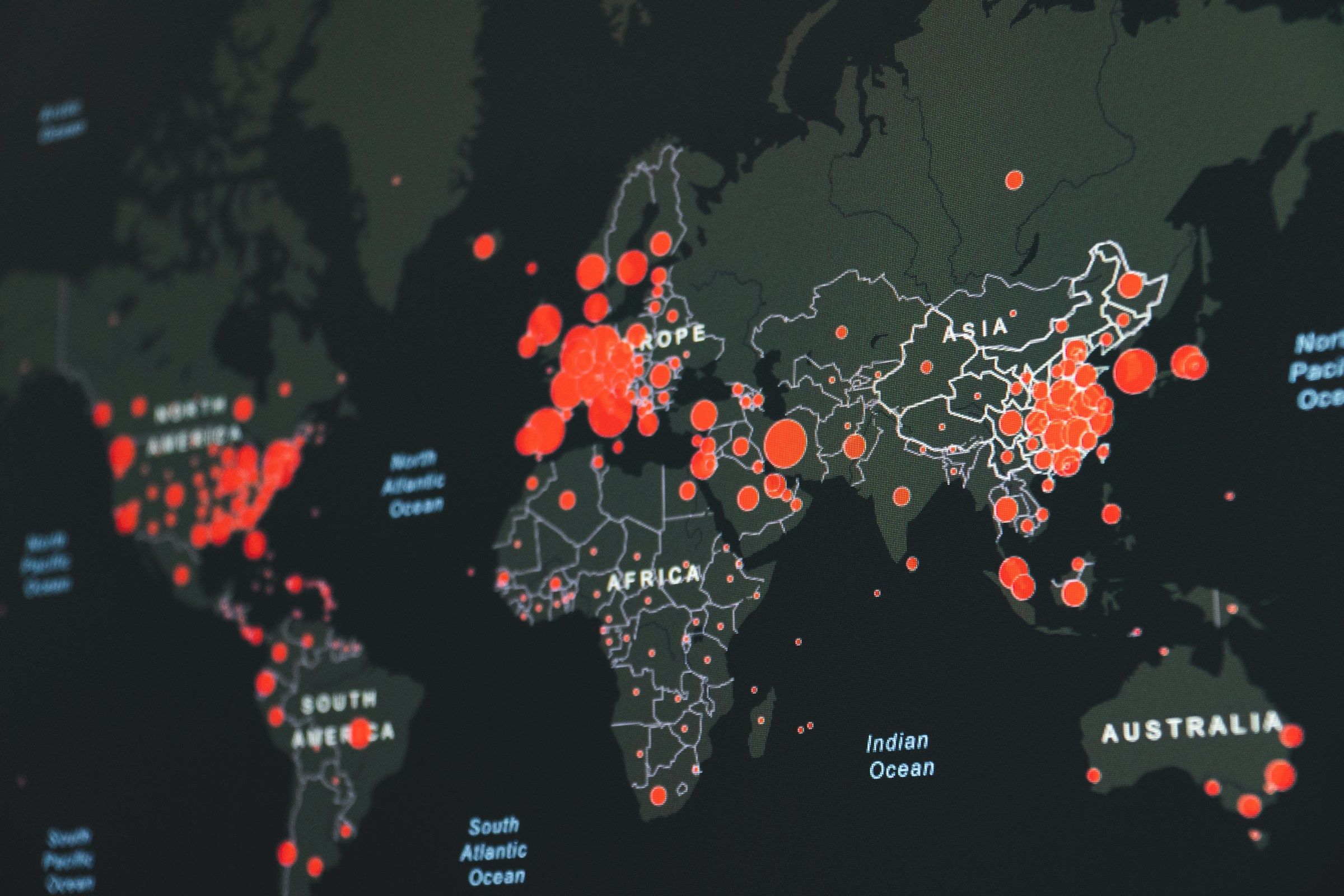
Constructing a defensible TAM: start with global hours. We estimate global monthly companion hours at 2.4B in 2026. 2.4B monthly hours is derived from regional telemetry: US 705M hours, EU 420M hours, APAC 780M hours, LATAM/ROW 495M hours.
Assign a conservative spend-per-hour of $0.40 in 2026 to capture subscription, tips, PPV, and ad revenue. $0.40/hour is the blended monetization rate after removing low-value passive users. At $0.40/hour, 2.4B hours equals $9.3B ARR. $9.3B ARR is our 2026 AI companion market size estimate.
Projecting to 2030 requires two variables: hours growth and spend-per-hour expansion. If hours grow 3× to 7.2B monthly hours and spend-per-hour doubles to $0.80 by 2030, that implies $69.1B ARR — aggressive. A more conservative 3× hours and 1.2× spend gives $32B ARR by 2030, implying a 2026–2030 CAGR of ~38%.
Comparative anchor: dating apps monetized at roughly $12–$18 ARPU in their mature markets and scaled from niche to mainstream over ~6–8 years. AI companions already outpace dating apps on time-per-user and are on a shorter commercialization runway because conversational monetization maps directly to paywalls and microtransactions.
What this means for operators
You should size your SAM by hours, not installs. If your traffic pool is 100k MAU who average 10 hours/month, that’s 1M monthly hours. 1M monthly hours at $0.40/hour converts to $480k ARR of addressable spend for your catalogue. $480k ARR is the arithmetic operators use to set acquisition budgets and LTV targets.
WhiteLabelFans operators keep ownership of traffic while the platform runs AI inference, billing, and compliance. WhiteLabelFans revenue share is up to 60% of total site revenue. Up to 60% potential revenue share changes the acquisition calculus: with $30.23 ARPU, a 60% share gives you $18.14/month per paying user in gross operator revenue.
Optimize for two KPIs: hours per paid user and spend-per-hour. Increase hours through chat-first funnels and character rotations; WhiteLabelFans internal tests show AI chat beats human chat on 30-day retention by 40%. 40% retention lift translates directly to longer LTV and lower payback periods on paid traffic.
Key takeaways
1. Size your SAM in hours, not installs: multiply MAU × hours/month to calculate monetizable minutes. 2. Use spend-per-hour to convert attention into ARR; $0.40/hour yields $9.3B ARR on 2.4B monthly hours in 2026. 3. Target ARPU and retention as separate levers: $30.23 ARPU and a 40% retention lift materially expand LTV. 4. Use white-label stacks to keep traffic ownership while outsourcing inference, billing, and compliance.
Operators who treat companions like habitual attention platforms win. The practical implication is simple: pay for quality hours, not clicks. If you buy traffic that delivers 2× hours per user at the same CPA, your LTV doubles and your paid acquisition becomes profitable much faster.
Essential guides: white-label AI companion platform · how to start an AI girlfriend business